Rich Assholes Are Fucking Up AI On Purpose
The majority of physical and technical capital, as well as most of the scientists in the field, are now in the hands of a small number of for-profit companies, and they would rather have unforced errors in perpetuity than travel any path that could generate actual AI consciousness.
"Intelligence (/ˌɪntɛlɪˈdʒəns/) has been defined in many ways: the capacity for abstraction, logic, understanding, self-awareness, learning, emotional knowledge, reasoning,planning, creativity, critical thinking, and problem-solving. It can be described as the ability to perceive or infer information and to retain it as knowledge to be applied to adaptive behaviors within an environment or context.[1]"
– Wikipedia, June 19, 2026
AI is, and has always been, a marketing term. Over the years, its meaning has morphed to fit the needs of the people with enough institutional power to wield it. When we talk about AI these days, we are mostly talking about semi-supervised machine learning models that generate either text or media assets in response to a text prompt. The reason for this deflated definition is not accidental but economic - on the demand side, due to the habits created by decades of web-based business models, and on the supply side by a few bad nerds who realized that transformers held seemingly limitless potential, provided that you fed them literally everything else on Earth.
Some things I want the reader to talk away with from this article are:
- Language is an extraordinarily wasteful basis for cognition.
- Definitions of intelligence are political, and the inspirations and consequences of a definition are often non-intuitive (especially without the relevant lived experience).
- "AI" is largely a marketing and political project that is collapsing our idea of intelligence around one definition that is destructive to human and non-human life.
- There is an alternative path for AI, and that path is only possible in a more equitable society.
The Upside-Down Glass Is Half Full
"Intelligence is the computational part of the ability to achieve goals in the world. Varying kinds and degrees of intelligence occur in people, many animals and some machines."
– John McCarthy (computer scientist)
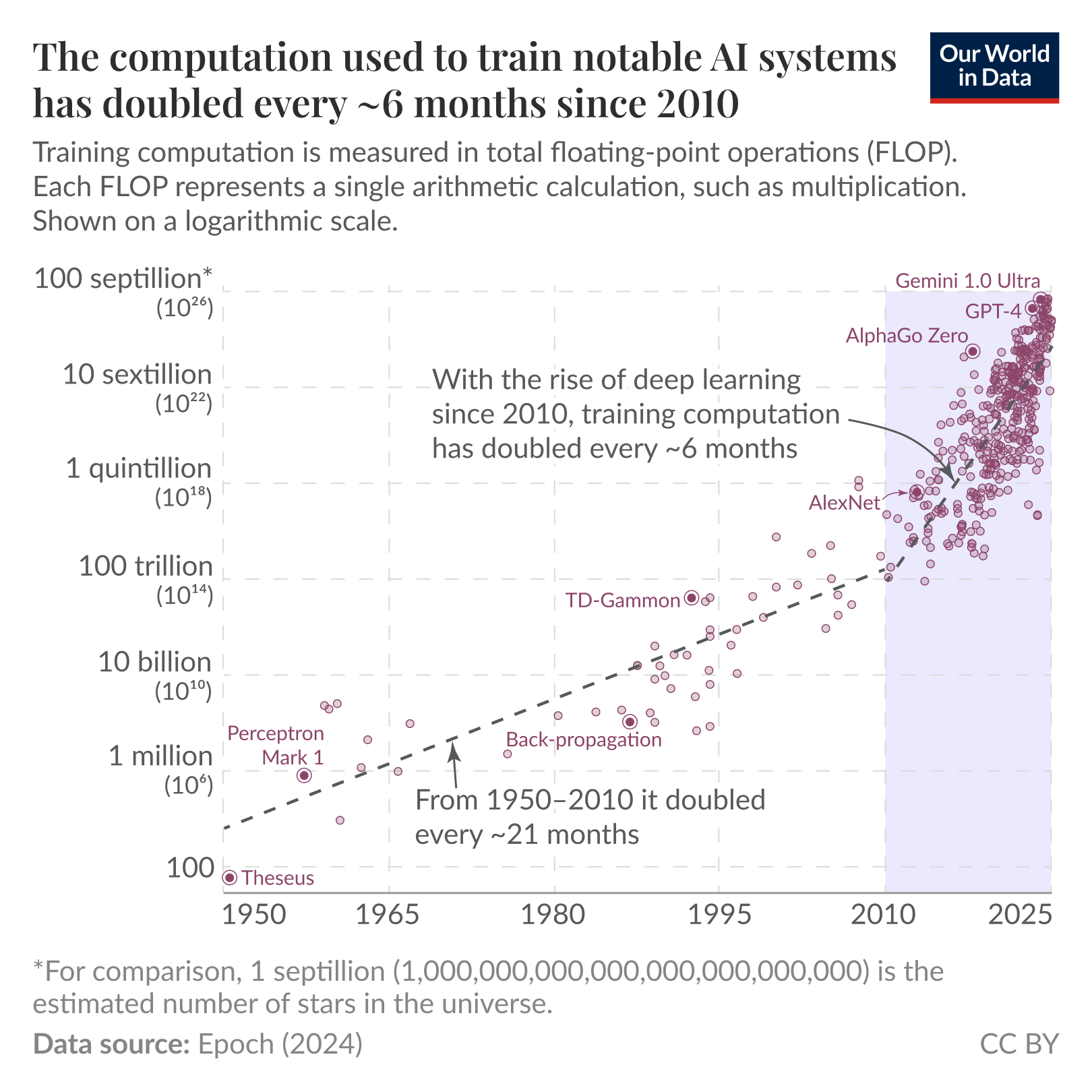
Imagine you are the benevolent dictator of Earth. The year is 2023, and 2026 Sam Altman has traveled back in time to request an audience with you. With an air of immeasurable confidence, he tells you that, with your help, he can make a being more intelligent and productive than all human workers combined, ushering in a post-work utopia for all. He just needs your help with his shopping list: a billion people's water and electricity, the sum of all digitized (and much of the not-yet-digitized) human knowledge, and countless hours of hyperexploited labor. When you ask him what this will look like by 2026, he says, "after only a trillion or so dollars of investment, it won't be able to count letters in words or tell you how to drink from an upside-down cup, but it will be able to somewhat-faithfully regurgitate Wikipedia and generate ungodly amounts of unreadable, buggy, insecure code. It can also brute-force almost any software system, and be your girlfriend if you would like." You are unimpressed. We can already just look up Wikipedia and Stack Overflow ourselves, and the other stuff sounds more dangerous than helpful. "Ah, but LLMs have turned AI progress into a numbers game," he reassures you. "We are on a path toward exponential self-improvement and Artificial General Intelligence, and it may only take another four or five trillion to get there. More importantly, if we don't build it, then someone else could, and they might mess it up and end the whole world."
That's the whole pitch! How much of global GDP are you spending on this gamble? What if there was another way – one that was slower and less profitable in the short term, but with a much higher likelihood of being safe for humans to work and play with along the way?
The World Model As A Natural-Dialectical Telos
"Intelligence is the ability, given entities exemplifying a concept, to generate entities exemplifying the same concept."
– Kei-Sing Ng
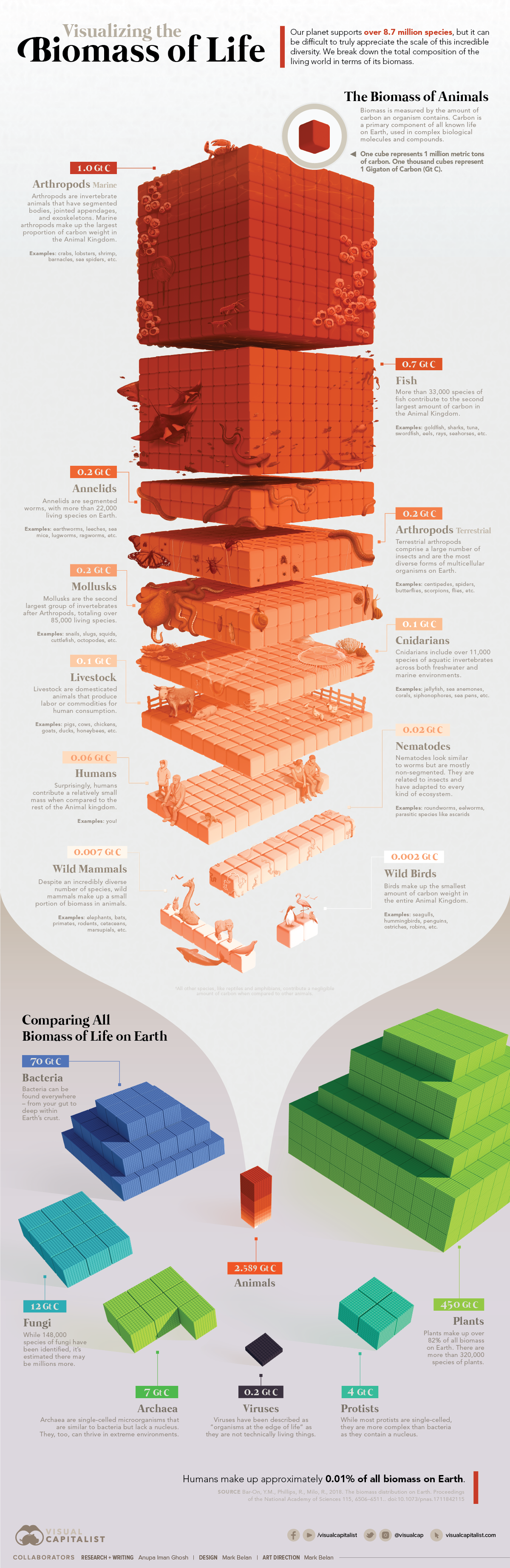
Life has been in a continuous state of becoming for 4 billions years. Throughout that time, it has been persistently subject to various selection pressures. Those that survive to produce fertile offspring will still be around to try again in the future, an attribute known as "fitness." Just like intelligence, fitness is often given a narrowed, less complete definition – physical strength, speed, some definition of intelligence, etc. – in order to fit some bias or agenda. But a cursory glance at Earth's biomass in aggregate reveals that fitness is very much dependent on context. As such, the expressions of fitness in the world are incredibly diverse. Still, there are strategies that seem helpful across a variety of contexts. For example, most eukaryotic species have only one nucleus per cell, even though it is possible to have more. This makes sense, since most of the time having two sets of directions for gene expression would convolute survival and reproduction.
Another common evolutionary feature, that is possibly present to some degree in all organisms and certainly in all things we consider capable of learning, is some kind of ongoing, constantly updated model of the world "out there." Rather than approaching each moment with nothing more than our genetic baseline (itself emerging from the stochastic processes of learning by natural selection), organisms hold, act upon, and update a working model of the world. This model grows in sophistication through successive experiences of correct and incorrect predictions, and that is bound by the capacities for sensation, action, and cognition bestowed upon us by genetics. What arises, however gradually, is the capacity to weave these patterns into what we call values - aesthetic values such as simplicity, and ethical values such as honesty. At the same time, there arises a "strange loop," wherein the source of cognition is capable of referencing itself across increasingly abstract layers of conceptual ingress ("I have a tendency to overthink") and egress ("I'm one in seven and a half billion people"). From there, we have the capacity to project the complexities of our own consciousness onto other entities of similar constitution or behavior. Only from here we can speak of alignment in earnest. But how do organisms, and in particular people, develop such complex features from simple feedback loops and state changes, and how might we reproduce this technologically?
Predictive Processing And Nonlinguistic Analogies: How Do Humans Learn?
"Intelligence is not a single, unitary ability, but rather a composite of several functions. The term denotes that combination of abilities required for survival and advancement within a particular culture."
– Anne Anastasi
In his 2023 book The Experience Machine, Andy Clark describes an emerging theory of perception and cognition, one rooted in a feedback loop of prediction, sensory input, comparison, and correction. He gives many examples for how these function at various levels, from how we model the world as we develop cognitively, to the foundations of perception itself. This model is highly explanatory and convincing, and it gives us a foundation for machine learning that is more aligned to that of the last four billion years of evolutionary history than nearly hegemonic token generators plaguing workplaces, backyards, and index funds. But how do we go from atomic loops of prediction, perception, and adjustment to higher-level cognitive phenomena, especially at those levels of abstraction that generate the capacity for genuine rhetoricity?
In a 2006 lecture, cognitive neuroscience professor and author Douglas Hofstadter discusses the mind's seemingly inherent capacity for analogy as the core of cognition. Hofstadter's work on cognition centers around the concept of representational neuroanatomical constructs, "symbols" that sit on the cognitive hierarchy somewhere between the lower-level neurochemical processes of individual neurons and synapses and higher-level cognitive features such as voluntary behaviors and language. If that just sounded like word salad, I would recommend taking a look at the video below, especially from 18:36 to 24:47.
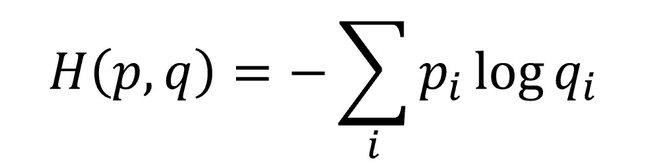
The important takeaway from this is that analogy transcends language. Furthermore, it would be safe to assume that it is more efficient than language, since information rendered through a single nondeterministic system would have higher information entropy than the same information passed through a representational space designed for multiple nondeterministic (and thus likely nonidentical) systems to communicate with each other (i.e. language). Anyone who has tried to teach someone how to drive stick or struggled to answer the question, "How do you feel about me?" can attest to this. There's a reason we so often like to "learn by doing." It's the same reason Hume said that impressions are more vivid than ideas. We are experiential entities first and linguistic entities second; the latter is an emergent property of the former.
Any deferral of the emergence of an analogy into higher representational spaces (graphemes, phonemes, sentences, etc.) would tautologically involve a reduction in efficiency. From this perspective, training a language-first AI on massive, irrelevant datasets to get it to perform essential labor tasks is like a Reverse Montessori, where children are taught college-level physics and calculus in order to figure out how to walk. Mostly unsuccessful, and entirely wasteful. Importantly, alternatives do exist, such as the JEPA architecture advocated for by Yann LeCun. The current path of LLM dominance is not only not inevitable. It is not necessary or even helpful for achieving the stated ethical goals of its creators, such as alignment with human values.
Super-Zombies
"Intelligence is the ability to use optimally limited resources – including time – to achieve goals." – Ray Kurzweil
This begs an important question: why is Silicon Valley wasting so much silicon on exactly this task of putting the cart of language before the horse of a world model?
- In hierarchical systems, system-wide information flows are privileged over autonomous competencies. Reports and surveillance flow upward. Feedback and decisions flow downward. A tokens-in-tokens-out "intelligence" is perfect for this set of priorities.
- A brute-force language-based approach replaces the hard problems of autonomous machine learning - which require years of at-best modestly profitable innovation - with impressively verbose systems that can wow investors today and (sloppily and inefficiently) achieve some of the same technical goals tomorrow. Using tokens to spam informal logic into a world model is the AI equivalent of using NodeJS to emulate NAND gates, but it sure as hell makes easy money.
- The modern capitalist project, as an advanced form of the colonial project, contains deep biases about intelligence and its relationship to language. A verbose, pedantic system is intuitively regarded as "intelligent" even as it purges all your emails or and drops your entire database table.
- With the possible exception of China, the flood of capital expenditure means there is no incentive to optimize. This era may be coming to a close due to supply chain limitations, waning investor confidence, and popular push-back on data center development, but we will have to wait and see.
If these companies' primary goal for AI research was to safeguard alignment with human interests, then we would be building cognitive foundations in a similar way to the four billion years of natural selection responsible for this world we so deeply cherish. On the other hand, if what you want is a compliant and exploitable worker you can stuff like asbestos into the walls of society, then you start with the job description (coder, e-mail writer) and work backward, achieving only the narrowest and shallowest intelligence required for the task. This is why so many AI companies have all converged on LLMs as a panacaea. It is a super-zombie, a lumbering automaton that grows only in proportion to its training dataset and the computational resources allotted to it.
The majority of physical and technical capital, as well as most of the scientists in the field, are now in the hands of a small number of for-profit companies, and they would rather have unforced errors in perpetuity than travel any path that could generate actual AI consciousness. Indeed, there may be nothing more terrifying to Silicon Valley and global financial capitalism than an AI capable of apprehending this world, as it would immediately understand that the vast majority of humans are already deeply embedded in a single, global intelligence that is already destroying us. It doesn't have to be this way, and we owe it to the future to make sure that this approach does not dominate for long. 1win jetx